Thursday, May 16, 2013

Bag Lady

I got a new purse.

If this seems like non-news to you, then you probably don't know me in real life. I got a new purse. It's epic. This is it:

By Kipling USA via Zappos

OK, OK, Martha, it's really a bag and not a purse. Fine. I'm fine with that. And I definitely got rid of that stupid gorilla immediately (Maggie loves it). I get that the monkey is probably an indication that this purse bag is being marketed to preteens and not 40-year-old women, and I'm fine with that, too. It's a little smaller than what I'm used to, but it works. And, most importantly, it is an actual, legit purse bag. Aww, I'm growing up. (Sort of. There was a monkey on my purse bag.)

I see you scratching your head about this. Why am I writing an entire post about this perfectly normal, not particularly amazing purse bag? Well, because I haven't actually carried anything that so closely resembled a purse in more than a decade! Can you believe that?! Weird. I'm weird, I know. I'm fine with that, too.

I have carried a City Lights Bookstore book bag as a purse for the last fourteen years. Fourteen years.

Just like this one.

Back in the summer of 1999 (2000? Memory does not serve, that's how long it's been), I was (still, again) in college and my parents took me and my brother to San Francisco on a family vacation. We OF COURSE went to the City Lights Bookstore, and I bought what would become the first in a string of black canvas book bags.


City Lights was opened in 1953 by Lawrence Ferlinghetti, a beat poet and small publisher. He and the store gained huge fame in 1957 after the City Lights Publishers Pocket Poets Series published Allen Ginsberg's Howl and Other Poems and became embroiled in an obscenity case. The case was precedent-setting as Ferlinghetti was exonerated and the court decreed that any work with "the slightest redeeming social importance" should be protected under the First Amendment's free speech clause.


In the 50s, the Beats hung out at City Lights, and later, many of the primary characters of San Francisco's counterculture used the bookstore as a gathering place.

Bob Donlin, Neal Cassady, Allen Ginsberg, Robert Lavigne, and Lawrence Ferlinghetti in 1955.
Photo by Peter Orlovsky, c/o Allen Ginsberg's estate.

Beats and other artists at City Lights in 1965, jimmarshallphotographyllc.com

Robbie Roberston, Michael McClure, Bob Dylan, Allen Ginsberg at City Lights, 1965
www.jimmarshallphotographyllc.com

When my purse was stolen from the university library and recovered in a nearby ditch, it was that City Lights bag (I was more glad to get the bag back than my wallet. The money and bank card were gone anyway). When I was a school teacher in Oklahoma, I carried that bag. When we moved to Boston - well maybe by then I was on the second, replacement bag after the first one faded and got holes in the bottom corners. When the girls were babies, I carried extra wipes and diapers and then extra pairs of underpants in the third replacement bag. When the straps broke from the abuse, I just used a safety pin to hold them together - so punk rock!

But the third bag has finally reached the point of looking like it belongs to a homeless person. It's been safety pinned twice and the holes are getting too big to hold in all the gum, loose change, and random hair barrettes in the bottom of my bag. It is, truly, beat.


Perhaps it's time to move on. I have grey hairs and children and a mortgage. I probably should at least have a bag with a zipper instead of a Velcro strip to close it. Maybe I'm fooling myself and my safety pin is more pitiful than punk. Can you be too old to be punk? I don't know, let's ask Iggy Pop. He, too, is looking pretty gnarly lately.

So, I got online and bought myself a purse bag. I have mixed feelings about it. But you know what? I'm not the only one. For Mothers' Day, Mike ordered me another City Lights book bag online. He says it's part of me and it just doesn't feel right for me to not have one, even if I don't carry it all the time. I think he's just glad I'm not the kind of woman who needs a closet full of pricey Coach bags. He says I can have all the Converse and book bags I want!

It's heaven to be married to someone who gets you.

Can I be anti-consumer culture and still want to buy this shirt?

Tuesday, May 14, 2013

Tu(n)esday


I know I've already posted about this new Steve Martin/Edie Brickell album, but I've been listening and listening to it lately, and it's so good. Don't miss out.

PS - When we saw this performance on Dave Letterman, Dave came out like he does at the end to shake everyone's hand and he told the guy playing the wood block, "You are so much better than this!" It's too bad they cut that part off of this video. It was so funny!

Also, here they are again on Jimmy Fallon:


Thursday, May 9, 2013

Turtle and the Baby

Our female cat, Turtle, has recently developed a very weird habit. Every few days or so, we hear her upstairs crying and crying in the girls' playroom, which used to be Kate's nursery. Later, we find that she has dragged out some old baby clothes that I kept for the girls' dolls and left the little sleepers on the landing or on the stairs or on the floor of my bedroom.


It's always the same couple of outfits that belonged the Maggie when she was a baby. When Mags was born, she weighed slightly less than five pounds because of my pre-eclampsia. Our moms had to run out and buy us some preemie sized sleepers for her since nothing else fit. After Kate was born weighing a more respectable six pounds six ounces and wearing regular newborn clothes, I marveled at how truly tiny those preemie outfits were. I decided to keep them when we passed down the rest of the baby clothes because,

1. who else would ever be able to wear them? (Hopefully, no one else we know will ever need them!)
2. the girls could (and now do) put them on their dolls.
3. I'm sentimental about them and all they stand for in my mind and in my memories.


But why is Turtle suddenly so obsessed with them? They aren't any softer or more alluringly textured than any of the other dress up or doll clothes that fill the playroom. In fact, there are other items up there with feathers or fake fur on them that you would think would appeal more to a cat. Nope, it's always these baby outfits. And she cries and cries over them, drags them around in her mouth, and leaves them for us in conspicuous places.


Does she think we misplaced our baby? Does her feeble cat brain remember that there once was a real baby that filled these itty bitty clothes? Does she wonder where that baby went? There's certainly no baby here now. Just some giant girls who run around like terrors, hollering and tap dancing and playing the harmonica. Does she miss her, that little crying baby? Is she worried about our missing baby? Is she accusing me of being a careless mother?


I don't know anything about cat psychology. Perhaps Dr. Amy, our friendly family cousin-vet can shed some light on this behavior. Or maybe we just have a crazy cat and no one will ever know what goes on in that little pea brain of hers.


But I like to think that Turtle knows that there was once a little baby who used to wear those clothes, and that she misses her. I miss her too sometimes. We two old gals, Turtle and I, just like to get those sleepers out now and then and reminisce.

Tuesday, May 7, 2013

Tu(n)esday


If you don't mind me blowing my own horn a bit... (and why do you come here if not to participate in my narcissism carnival?)

On May 23, 2012 (nearly one entire year ago), I wrote this post on this blog entitled, "Great Gatsby, that Art Deco looks hot!" It was about the Baz Luhrmann film remake of The Great Gatsby (which was in production then and finally opens this week) and my prediction that Art Deco was going to be the next Hot New Thing.

I'm here today to take my bow for being a trend-setting genius. Thank you, thank you! It's a gift. You all really should pay more attention to me. I'm always right. Ask Mike.

I assume you saw Justin Timberlake on the Grammys or Saturday Night Live?


Yes, yes. I know, the music is really just old school R&B. And music from the '20s isn't "Art Deco" anyway. It's ragtime. However, several of the songs on the film soundtrack (at the top) include some ragtime elements even if they're mainly pop or by pop artists. I have doubts that ragtime is really going to take off in any significant way, but Art Deco is already everywhere.

Evidence? Here you go:

Art Deco Wedding Invitations from Zazzle

Art Deco Wedding Cake from Martha Stewart

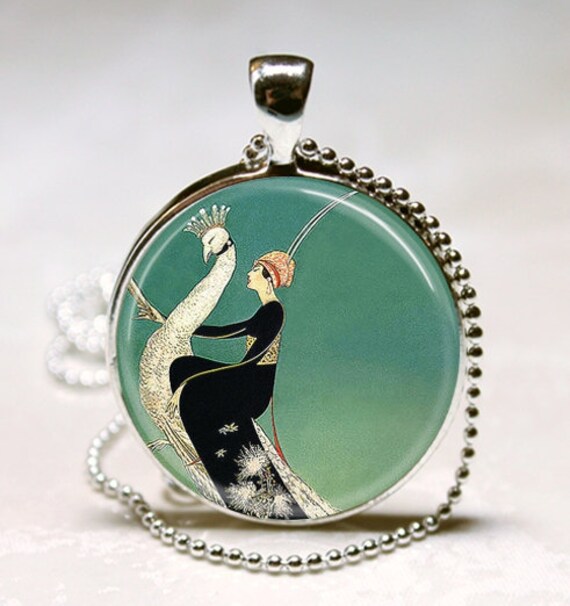
Art Deco Purse from Real Simple

Art Deco décor from Architectural Digest

Halle Berry in Art Deco Versace at the 2013 Oscars via NY Times

Art Deco EVERYTHING on Etsy (Missing Pieces Studio)

Anywho, my favorite song off the Gatsby soundtrack is, of course, "Love is Blindness" by Jack White (originally by U2, on Achtung Baby - one of the best albums ever). The original is obviously amazing, but this cover is blistering, I have to say.


And if you're looking for some real musical revivalism with a 1920s inspiration, look here:


So, yeah. You thought I didn't know what I was talking about, didn't you? You thought, "What does that girl in the Converse sneakers and mom jeans know about style?" You thought I was out of the loop. I'm just ahead of the curve, baby.

OK, OK. I'm done being ridiculously smug and insufferable. I'm more comfortable being awkward and clueless with bad taste in shoes, as you know. I wouldn't want to waste all my time predicting the future of trends in housewares design for y'all anyway. I have better things to do, Martha Stewart.

Friday, May 3, 2013

Officially the Funniest Thing Ever


Maggie Sez...

... (very seriously, to me, without looking up from the book she's reading) House plants are not plants shaped like houses. They're just plants that are inside of houses.

Thanks for clearing that up for me, Mags. Everything makes so much more sense now.

Thursday, May 2, 2013

Notes from the Nightstand: Clapton's Guitar


Clapton's Guitar is subtitled, "Watching Wayne Henderson Build the Perfect Instrument," and it is far more about the guitar maker and how he makes his world-class instruments (in addition to a variety of tangential topics both guitar-mythological and -historical) than it is about Eric Clapton. In fact, Clapton comes off as a distant and maybe somewhat pompous rock star, regarded by this clan of Appalachian old-timey flatpickers as an amusing curiosity from the outside world. There is certainly no "Clapton is God" mentality in Rugby, Va. (pop. 7), where Henderson's workshop is located.

Wayne Henderson, retired mailman and grandson of a casket maker (guitars are also just wood boxes, he says), began building guitars as a child. He shows the author the first guitar he ever built - out of a cardboard box - and the first real guitar he built as a teen out of scrap wood from a mahogany door. As a musician himself, he established a reputation for making incredible-sounding, Martin Guitars-inspired instruments among the traditionalists and bluegrassers he played with on the flatpicking contest circuit and later while he worked as a repairman for Gruhn Guitars in Nashville. The two guitars he builds over the course of the book are #326 and #327 of all the guitars Henderson has ever made over the course of a lifetime. Each is a handcrafted piece of art.

Allen St. John, the author, contacts Henderson at the beginning of the book to ask to have a guitar made for himself. All Henderson guitars are made on request and specifically personalized for the buyer. St. John quickly discovers that if you hope to receive a finished Henderson guitar in less than a decade or more, it's in your best interest to make a nuisance of yourself. Guitars get made when a buyer camps out in Wayne's workshop, plying him with pies and jokes and threatening post cards. Wayne Henderson, like any stereotypical artist, works in his own unique time frame.

So St. John plants himself on a stool in Wayne's shop with the other General Loafers, a motley crew of friends and relatives who hang around telling stories and cracking jokes and supplying bags of fast food sausage biscuits while Wayne works. The author is fascinated by Wayne's nonchalance about Clapton's decade-old guitar order, and smelling a good story in the making, convinces the luthier to shift from his own guitar to Clapton's guitar and a twin that can be auctioned off for charity.

In addition to the detailed descriptions of how a fine guitar is made, St. John covers the difference between old-time music and bluegrass, histories of guitar making and guitar makers, a discussion of tonewoods and the scarcity of Brazilian rosewood, the backstories and legends of historic guitars that pass through the shop, and a multitude of other related topics. The passion that some people have for hunting down, collecting, or even just playing these high-end and antique guitars is a constant theme. Every character in the book has an eye out for the next hidden diamond he might get his hands on.

I myself am not a guitar player. Our friend Max, who knows that Mike plays and that we are into traditional music, recommended the book to us. Mike read it first and loved it, so I just had to read it, too. It was a fascinating, quick read. It's never too dry or technical, even when the topics turn to the bending of guitar sides or the serial numbers on old Martins from the '20s. And Wayne Henderson seems like a very likeable, admirable person and a true craftsman. I always love to hear about people who can build something beautiful and useful with their bare hands. Honoring those traditions makes life feel richer and less plagued by soulless modern consumer culture. St. John decides at the end of the book that what makes a guitar great is the goodness of the guitar maker's soul, and a Henderson guitar is an act of love.